
*content and trigger warning* please be advised this article discusses traumatic memories, triggers and the way trauma impacts the mind, body and whole human organism. please take care of yourself and pause or step away if needed. read at your own discretion.
this is the new short read series where we explore different ways trauma may have impacted our lives, so we can learn and grow with awareness together.
today we are going to dive deeper into understanding what actually happens in our brain during and after we experience trauma.
like why are our normal memories stored differently to traumatic memories?
disclaimer; the information in this article is based on my personal research, experience and learning. please know that i am not a licensed professional and this information is not meant to replace professional guidance.
what happens to our brain in trauma
if you tend to wonder why trauma makes you think, feel, or react the way you do, you’re not alone.
much of this change comes down to how our brain protects us in the face of trauma.
the more we learn about the different areas of our brain and what their roles are, the more we can understand our mind.
i wholeheartedly believe that when we take the time to understand the parts of ourselves impacted by trauma, we are cultivating conscious awareness,
and this awareness opens doors for us to learn, grow and transform.
what is trauma
the word ‘trauma’ nowadays is very widely used, but we are going to quickly go over what it actually means.
trauma is a psychological wound.
it isn’t what happened to us, it is what happened within.
so when we speak about trauma, it isn’t the external event or experiences we endured, rather, it’s the impact it had on our nervous system.
it’s the psychological and physiological response we have to an event or a series of events, that leave lasting imprints and changes within.
understanding our brain
throughout this article you will notice references to both our brain and our mind.
our brain is the physical organ (we can physically see it), it is what drives our survival system/reactions,
while our mind is our conscious experience, (we can’t physically see this), and it shapes our core beliefs, emotions, perceptions, how we think, feel, make meaning, ect.
“if our brain is the instrument, our mind is the music it creates”
analogy of the difference between the brain and the mind
the brains role
our brains role is to constantly keep watch over what is going on within and around us, figure out what it means, and then share this information with the rest of our body.
our brains most important job is to ensure our survival, meaning its first priority is survival, not logic.
this is our bodies survival system trying its hardest to keep us safe.
how are traumatic memories stored in the brain?
all memories are stored within our brain, however, traumatic memories are stored very differently.
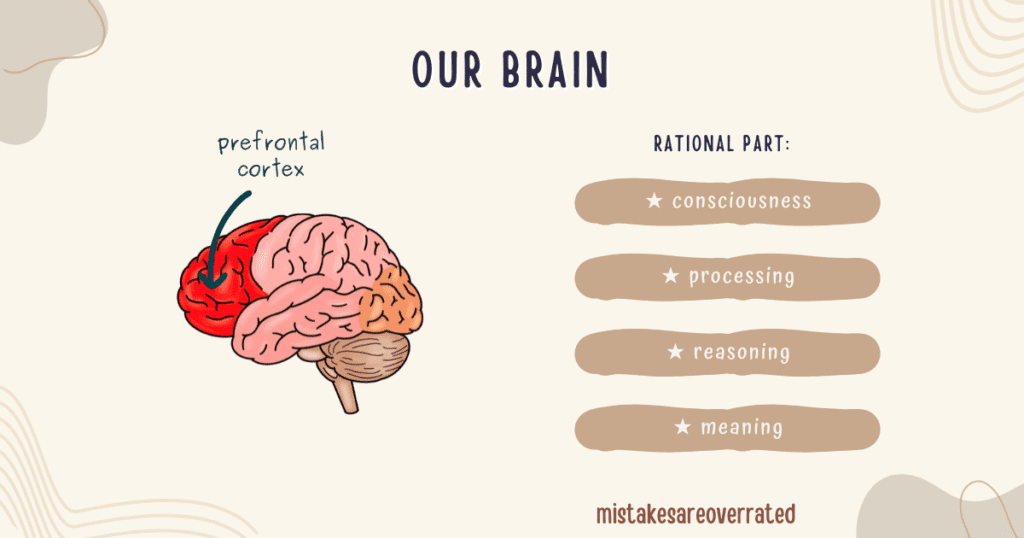
a part of our brain known as the prefrontal cortex, works very closely with other parts of our brain to store our memories.
this section of our brain is our rational part;
rational meaning the part of our brain used for logic.
- it is responsible for our conscious awareness,
- it helps us process information,
- reason though situations,
- make meaning of our experiences.
amygdala
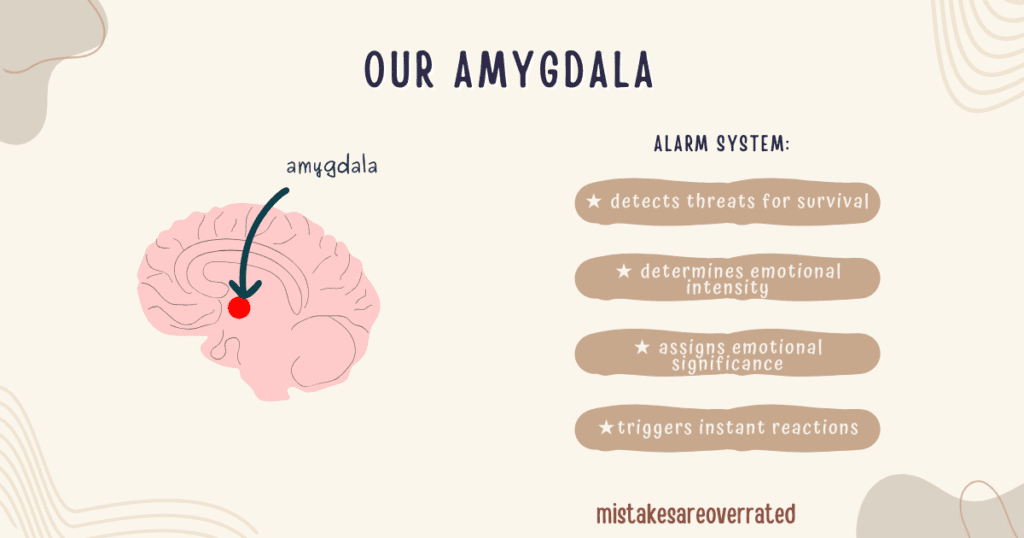
a small section of our brain, often referred to as our ‘alarm system’, is called the amygdala.
this small section plays a crucial role in processing emotional aspects of our experiences and memories.
particularly related to the impulse and intensity of the emotions when in sensed fear or survival mode.
our amygdala is found deep within our limbic system, and operates primarily in our unconscious brain, (so outside of our conscious awareness).
when our brain is triggered and senses potential harm or threat, our body and mind enter a state of survival.
scans have showed that when we go into our state of survival, our rational prefrontal cortex can actually shutdown!
trauma response
i mentioned our survival mode and state of survival just above, but what do i mean by that?
(some other common names include survival response, trauma response, stress response, autonomic nervous system response, ect)
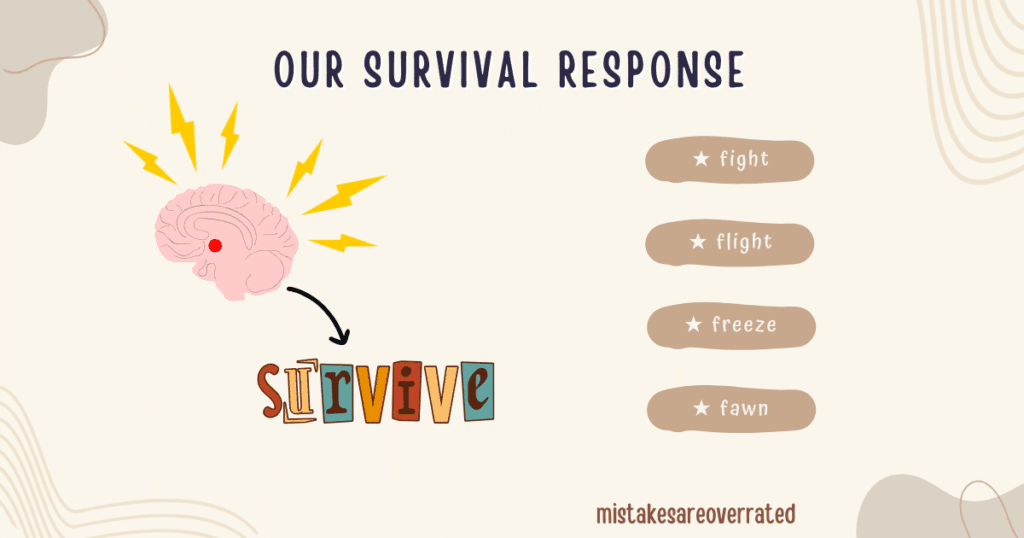
trauma responses are irrational, meaning they occur largely outside of our control (our conscious awareness).
our survival based brain systems automatically scan for danger, and if danger is sensed, it reacts by triggering our trauma response before our conscious awareness even registers this threat.
trauma responses may appear as fight, flight, freeze or fawn.
even though there are 4 responses, every persons trauma responses are unique and differ.
storing traumatic memories
when we are in our trauma response, our brain doesn’t allow our memories to stored how they normally do,
as a narrative or story, with a beginning, middle and end (by our hippocampus).
instead our amygdala (our alarm system) encodes the emotional intensity and sensory fragments of our ‘memory’.
these fragments are pieces of our experience, stored in the ways our body and senses experienced the trauma in the moment.
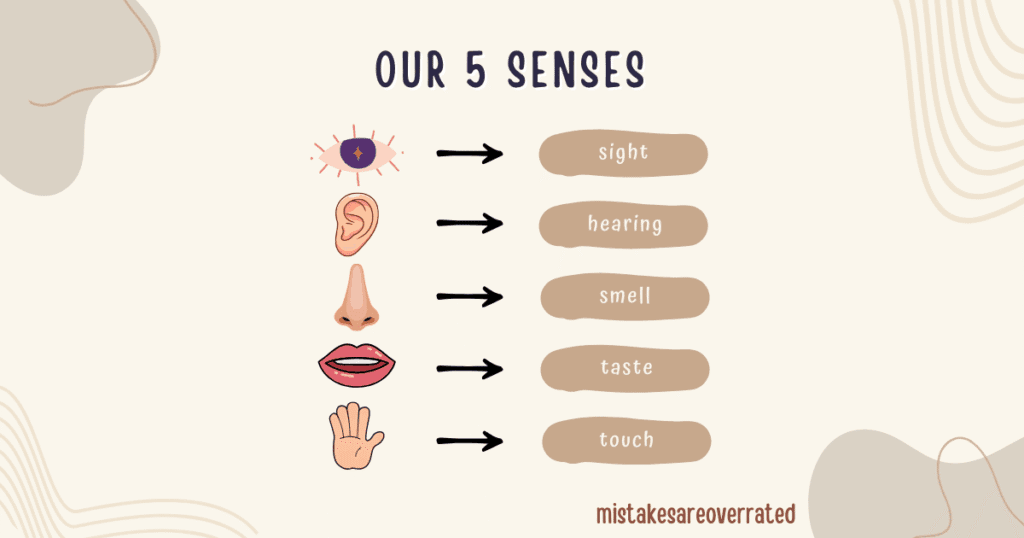
this is how our 5 senses were experiencing the trauma at the time. these being;
- sight, (what we saw)
- hearing, (what we heard)
- smell (what we smelt)
- taste (what we could taste)
- touch (what we felt in our body)
how does trauma affect my memories?
trauma affects our entire human organism.
it isn’t just an experience/s or event/s that happened in the past, it is the lasting imprint of what was left behind within us.
trauma can impact us as a whole, including our mind, body, nervous system, brain, imagination and sense of self.
it can reorganise the way our mind and brain manages our perceptions, shaping how we think, what we think about, and our ability to reason and reflect.
after experiencing trauma, our amygdala can become overactive or disorganised, causing it to misread safe situations as danger.
this struggle to distinguish between what is normal and what is dangerous can cause our body to go into survival mode due to stimuli or sensory input.
this is why it can feel like our trauma is happening all over again in the moment, even years after the experience/s.
when we experience a flashback or trigger we aren’t just remembering the event or experience itself, we are actually reliving it.
those stored sensory fragments intrude our present time, causing us to experience the trauma as if it were happening in the moment.
from my heart to yours
taking the time to learn about how trauma works and is stored in our body is a courageous step, you should feel proud of the care you have shown yourself.
through this, we honour how trauma may have shaped us or someone we care about, opening the door to awareness, growth, and self compassion.
each moment you spend understanding yourself, or others, creates space for the possibility of safety and healing.
i’m proud of you for showing up for yourself and understanding yourself or someone close to you better 🤍